Without using chemicals, worrying about resistance development, or GMO (genetically modified organism).
Request a Field Trial Survey for Mosquito Control Professionals Survey for Community Members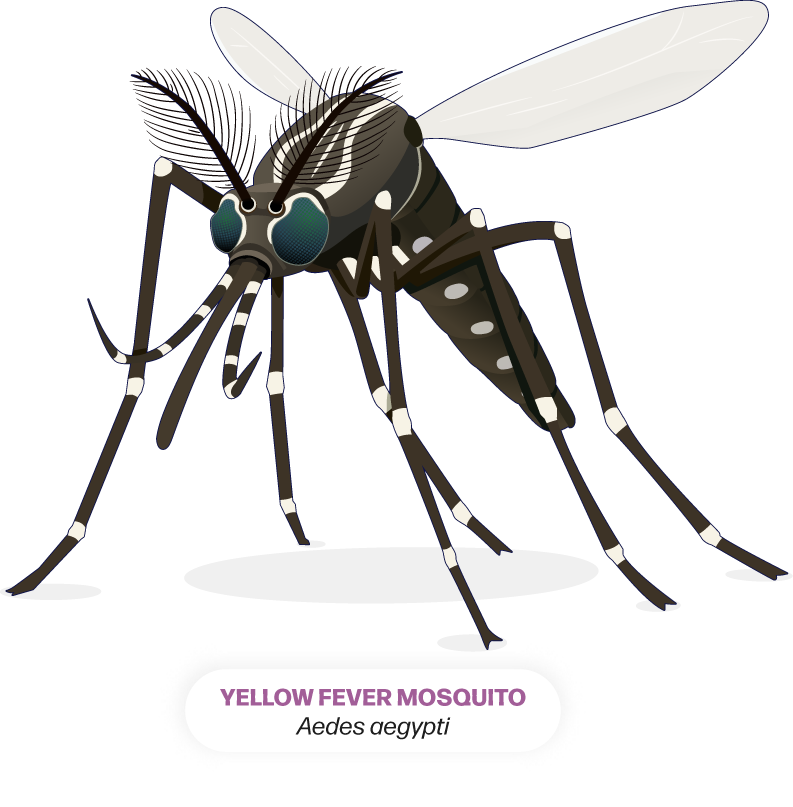
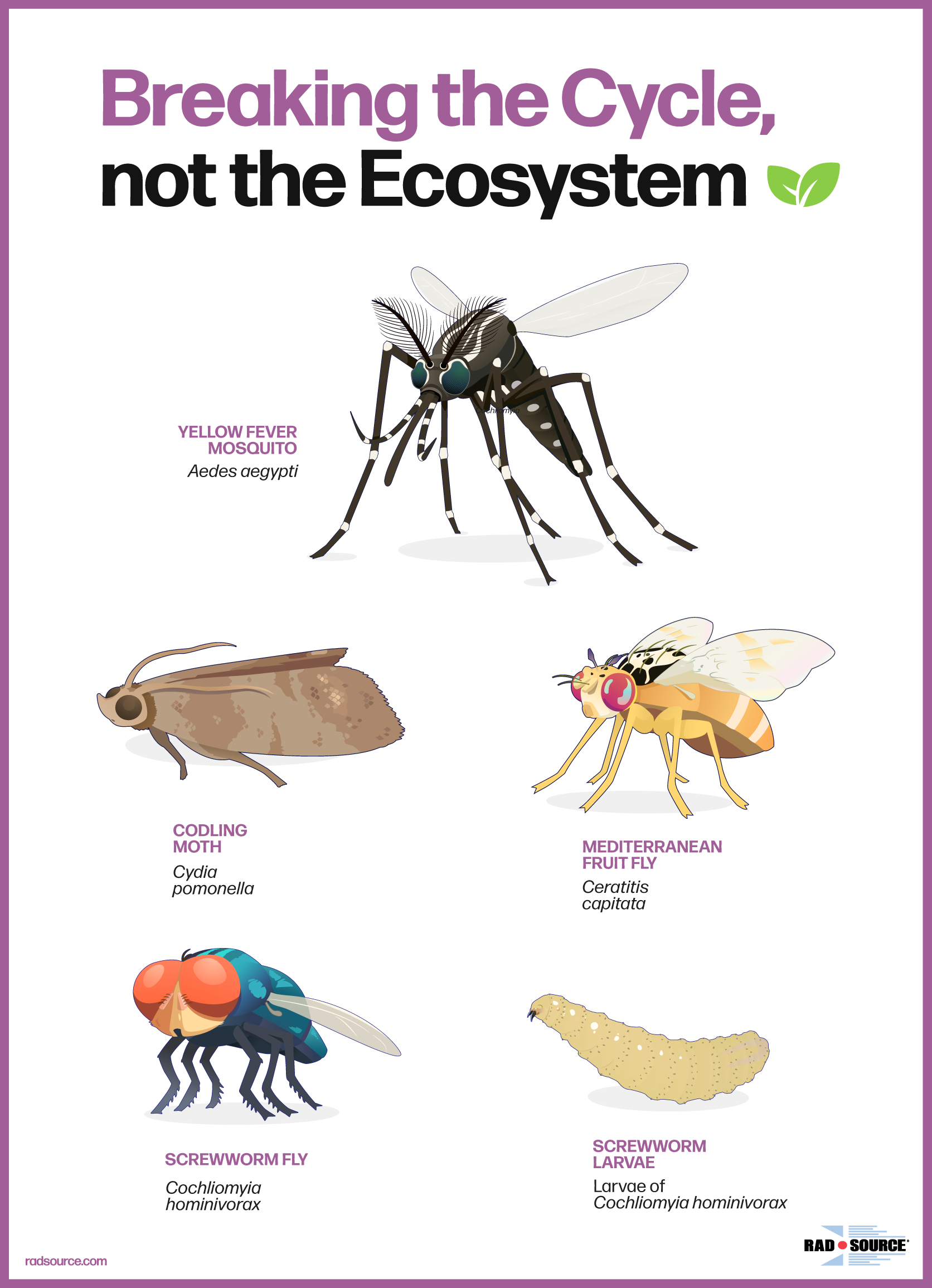
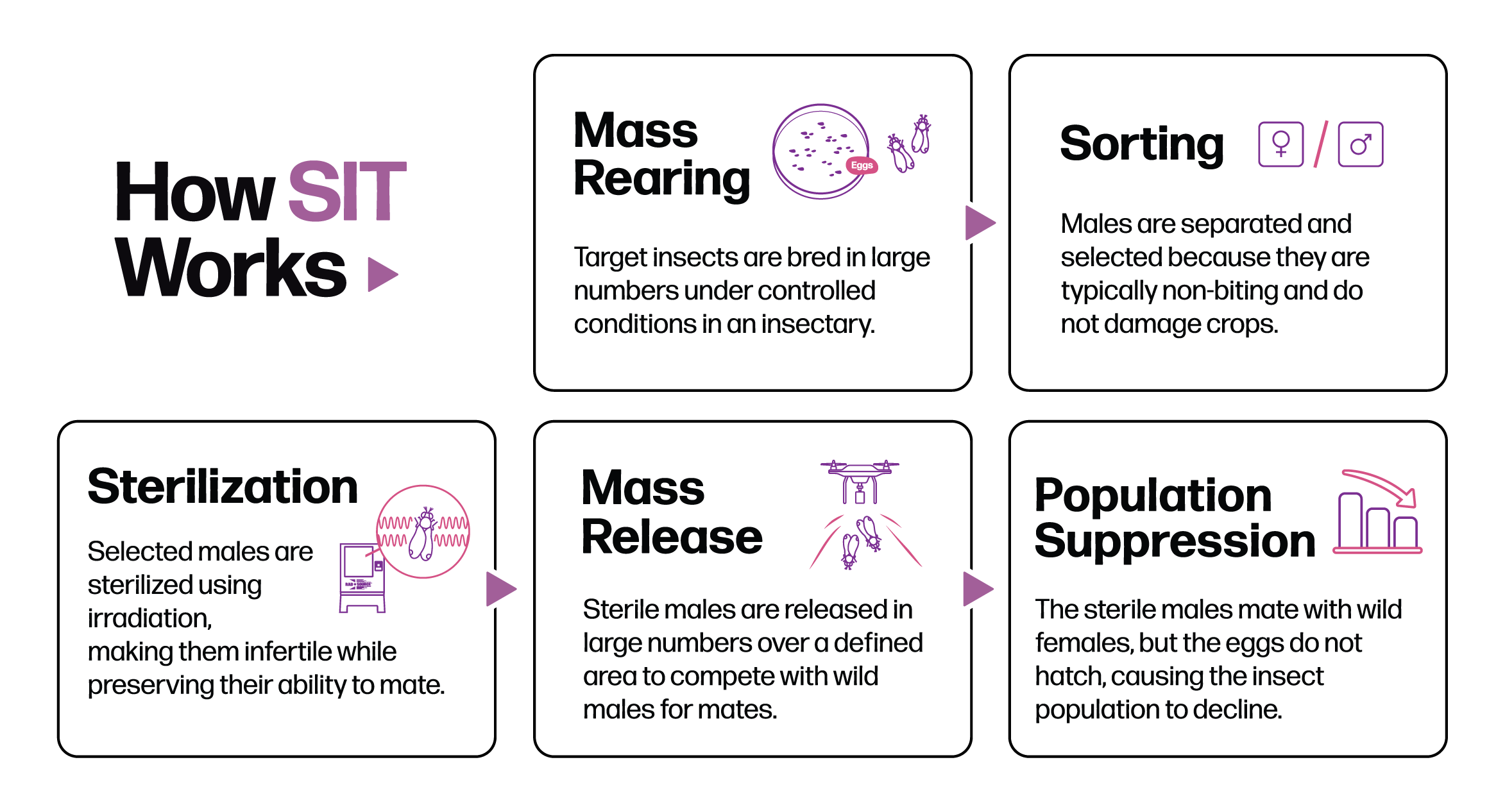
Sterile Insect Technique (SIT) is a form of biological pest control for insects, often mosquitoes, but also fruit flies, moths, and other pests. Sterile Insect Farms (SIF) uses Rad Source’s X-ray irradiation system to sterilize adult insects, then organizations release them in large numbers into the wild. It’s an environmentally friendly method that reduces insecticide use while maintaining ecological balance.1
Sterile Insect Technique (SIT) a method already cutting wild mosquito populations by nearly 82% in a Greater Los Angeles County Vector Control District pilot program.
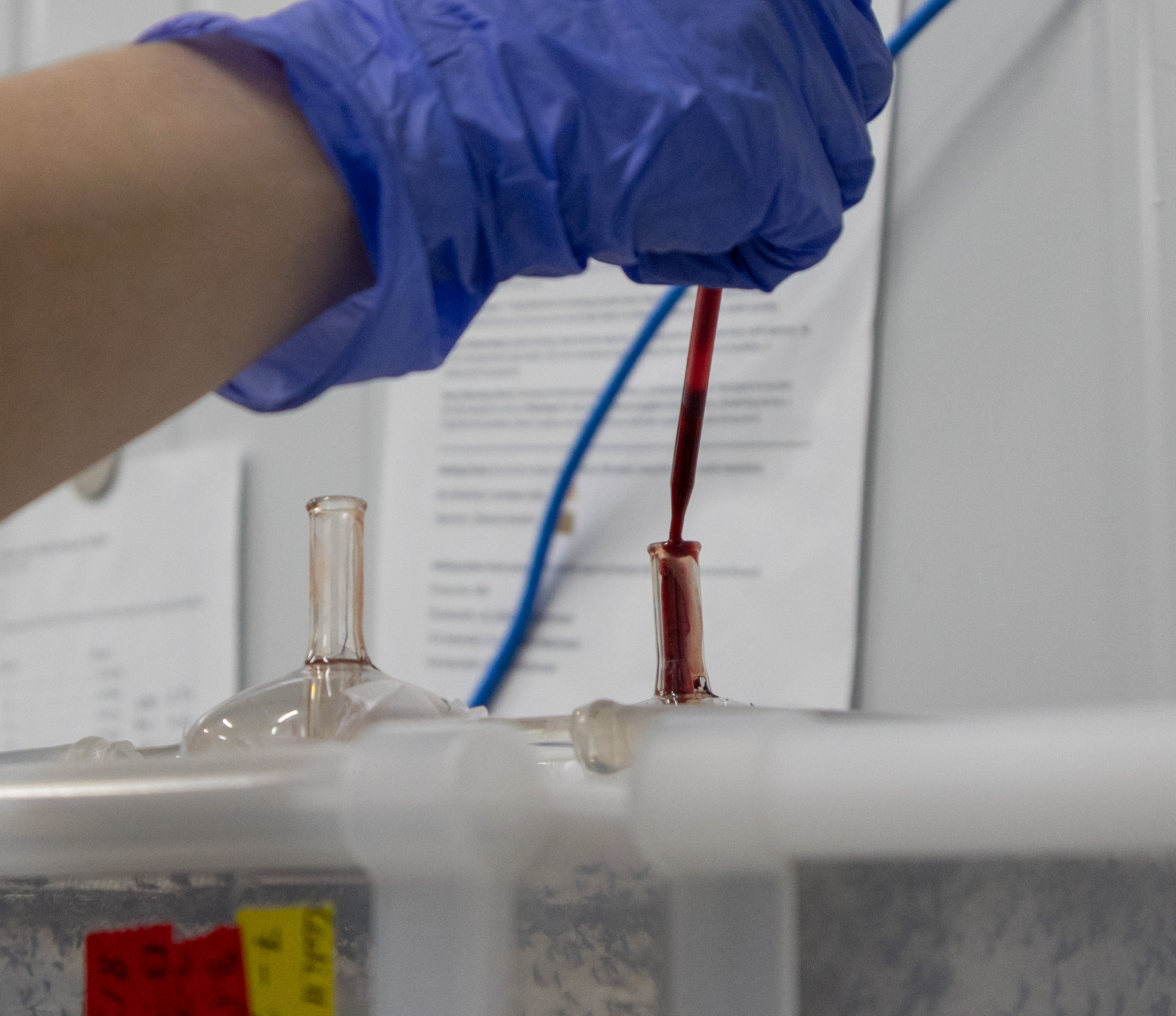
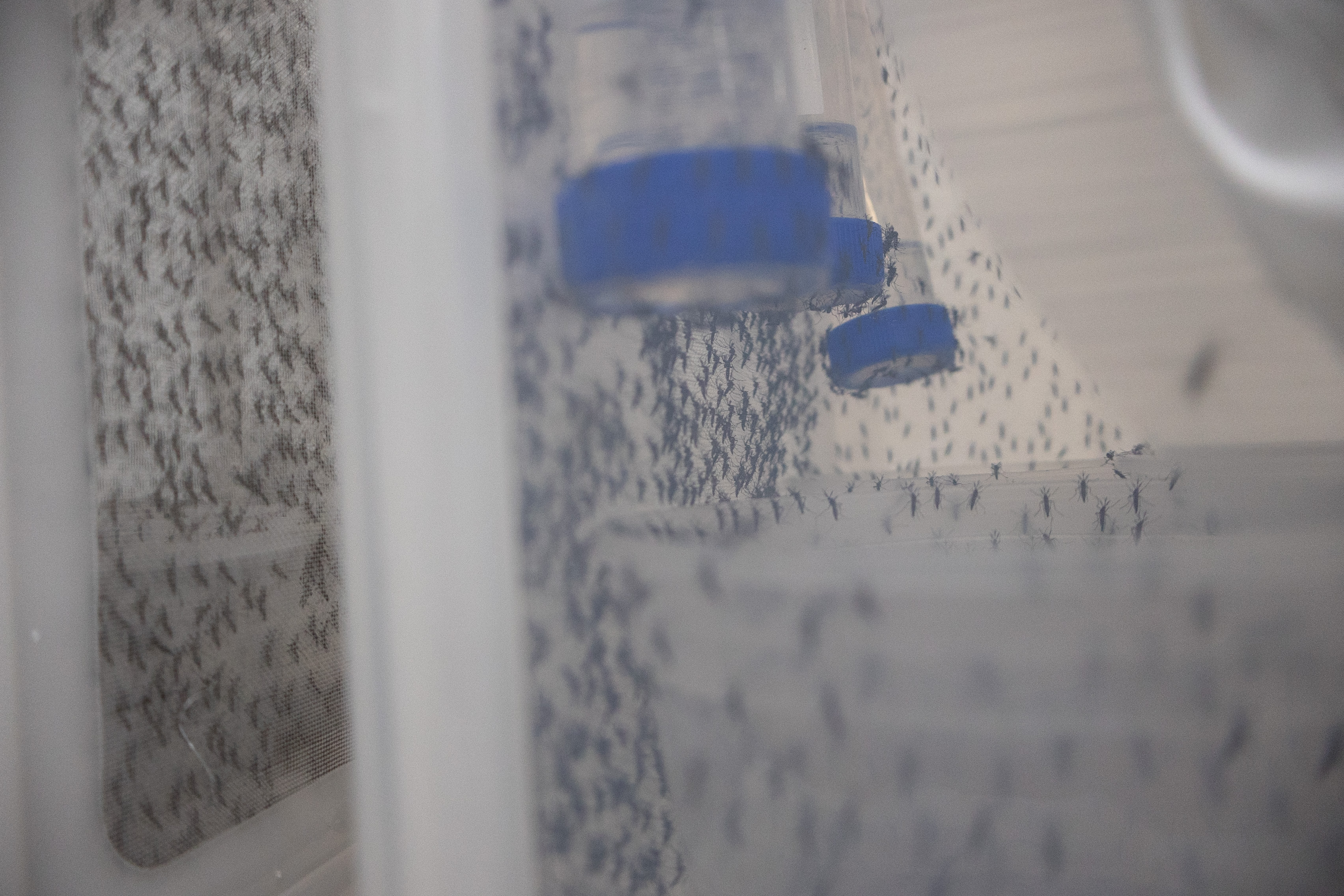
Most residents have never heard of the Sterile Insect Technique before it comes to their area, and that unfamiliarity is common.
SIT programs are already running in neighborhoods across California and Florida, with strong community support once people understand how it works. Here are the five questions every district hears first.
Male mosquitoes only. Males feed on plant nectar the same way honeybees do. They have no interest in you, and they cannot bite even if they wanted to. Only females bite, and only because they need protein to develop eggs.2
No. X-ray irradiation directs high-energy photons at the insect, the same physics behind a dental X-ray. Nothing radioactive is used, and nothing radioactive is left behind in the mosquito. Once the machine is off, the X-rays are gone.3
No, DNA is not inserted, edited, or engineered. The mosquito we release is the same species already living in your area. The only difference is that it cannot produce offspring that hatch.1
SIT is species-specific. Sterile male Aedes aegypti only mate with female Aedes aegypti. Pollinators, fish, birds, and bats are unaffected, and the released males are safe if something eats them.1
The released males live a normal short life and die. No bacterium spreads, no gene persists, and no residue is left in the soil or water.
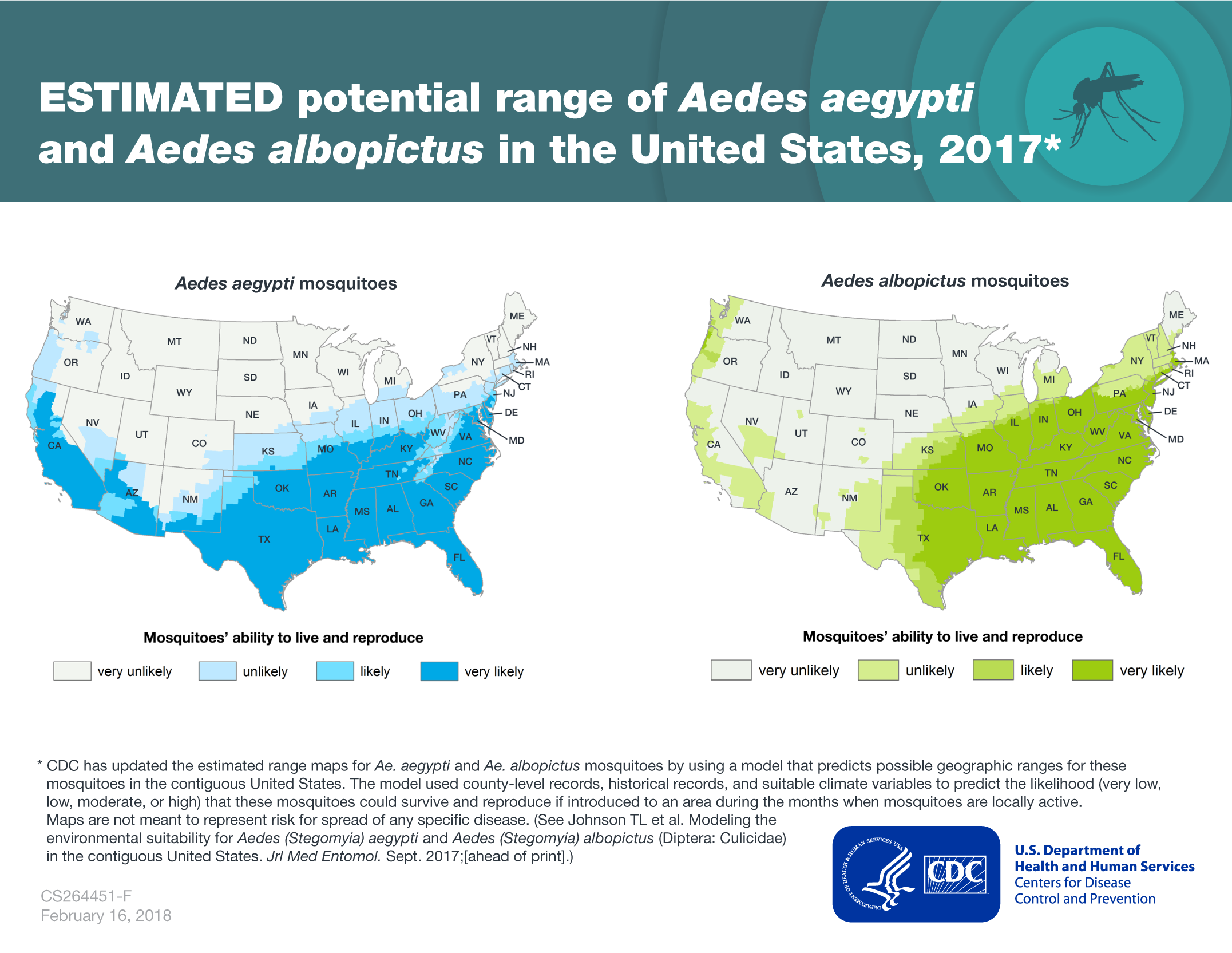
Most female mosquitoes will feed on whatever host is nearby, such as birds, deer, or household pets. Aedes aegypti is different: it has evolved over thousands of years alongside humans and preferentially seeks out human blood, even when other hosts are available.7
Unlike many mosquito species, Aedes aegypti is a daytime feeder, so bed nets offer little protection. It tends to bite low, around the ankles and feet, where its presence often goes unnoticed. Because it typically takes several small blood meals to produce a single batch of eggs, one infected mosquito can potentially transmit a virus like dengue to multiple people in a single day.8, 9
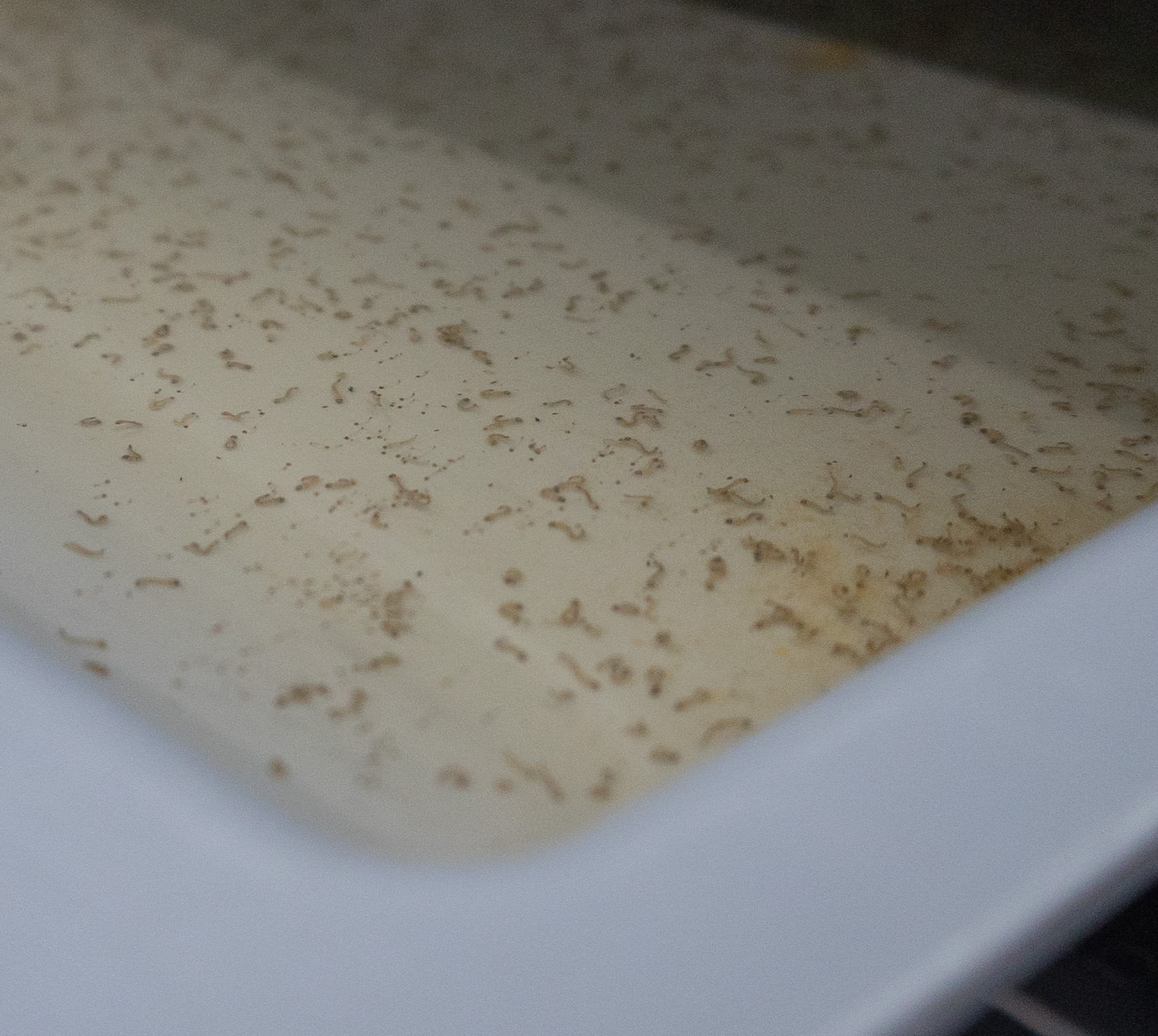
The species also breeds close to where people live. Its eggs and larvae can develop in astonishingly small amounts of standing water, a bottle cap, a clogged gutter, a plant saucer, a tarp fold. As a result, the mosquito responsible for a bite is often one that developed within a hundred meters of that location.10
If you’ve followed recent developments in mosquito control, you’ve likely encountered the term Wolbachia. It’s worth understanding, because the underlying mechanism, and what it introduces into the environment, differs fundamentally from irradiation-based approaches like SIT.
If a female is accidentally released: still sterile, cannot establish in the wild
Introduces to the environment: nothing that outlives the insect
Track record: 70+ years, used on many pest species
Advantage: non-GMO, no chemical approach
Stays effective: an accidental release poses no risk to the technique’s long-term reliability
If a female is accidentally released: can establish Wolbachia in the wild population
Introduces to the environment: a bacterium, requires ongoing monitoring
Track record: 17+ years as a mosquito control tool
Disadvantage: once established, the Wolbachia infection spreads on its own through the local population and can’t be recalled
Risk of accidental release: an escaped infected female can spread Wolbachia into the wild population, undermining future control
Wolbachia is a bacterium found naturally in roughly half of all insect species, including many bees and butterflies.11 It does not normally live in Aedes aegypti.12 When researchers introduce it, it creates a form of sterility called cytoplasmic incompatibility. A male carrying Wolbachia mates with a wild female, and her eggs do not hatch.13
Sorting males from females is mechanical, and at the volumes these programs run, nothing is perfect. Wolbachia passes only from mother to offspring, so a carrier female that mates with a wild male produces a full brood that inherits the bacterium.13 Given enough generations, Wolbachia spreads until nearly every mosquito in the area carries it, permanently changing the local population and ending the suppression effect.14
A precise X-ray dose sterilizes every insect in the batch, male and female. A female that slips through can still fly and still mate, but she cannot produce viable eggs. No offspring means no inherited bacterium and no lineage to start a population shift.15
Sterile Insect Farms ships male Ae. aegypti that have already been X-ray sterilized, sorted, and packaged for field release. Your team opens the shipment on-site and releases them directly, with no additional handling required.
A program in Lee County, Florida applied this same approach and reduced the wild Ae. aegypti population by up to 79%, using X-ray sterilization alone, without Wolbachia.4
Do you want to run a field trial, or replenish your existing egg stock? Fill out the form below and our team at Sterile Insect Farms will follow up to discuss what a program could look like for your district.

If you support Sterile Insect Technique, show it. Fill out our quick survey, it takes less than 5 minutes, and get a free digital copy of our poster, “Breaking the Cycle, Not the Ecosystem,” as a thank-you you can proudly display!
Homeowners and business owners can use any email. If you’re with a mosquito control district or professional organization, please use your work email so we can route your response correctly.